

In a world where almost everything can be delivered through a screen, digital products have quietly become one of the most practical ways to create, sell, and scale value. You don’t need a warehouse. You don’t need to ship anything. Once the product is made, it can be sold again and again with almost no extra cost.
Yet many people still find the idea confusing. What exactly counts as a digital product? How does the whole process actually work from creation to delivery? And why have so many creators, freelancers, and small businesses shifted toward them?
This guide answers those questions clearly and completely.
What Are Digital Products?
A digital product is any item that exists in digital form and is delivered electronically. There is no physical object involved. The customer receives access through a download, a login, a streaming link, or an automated email.
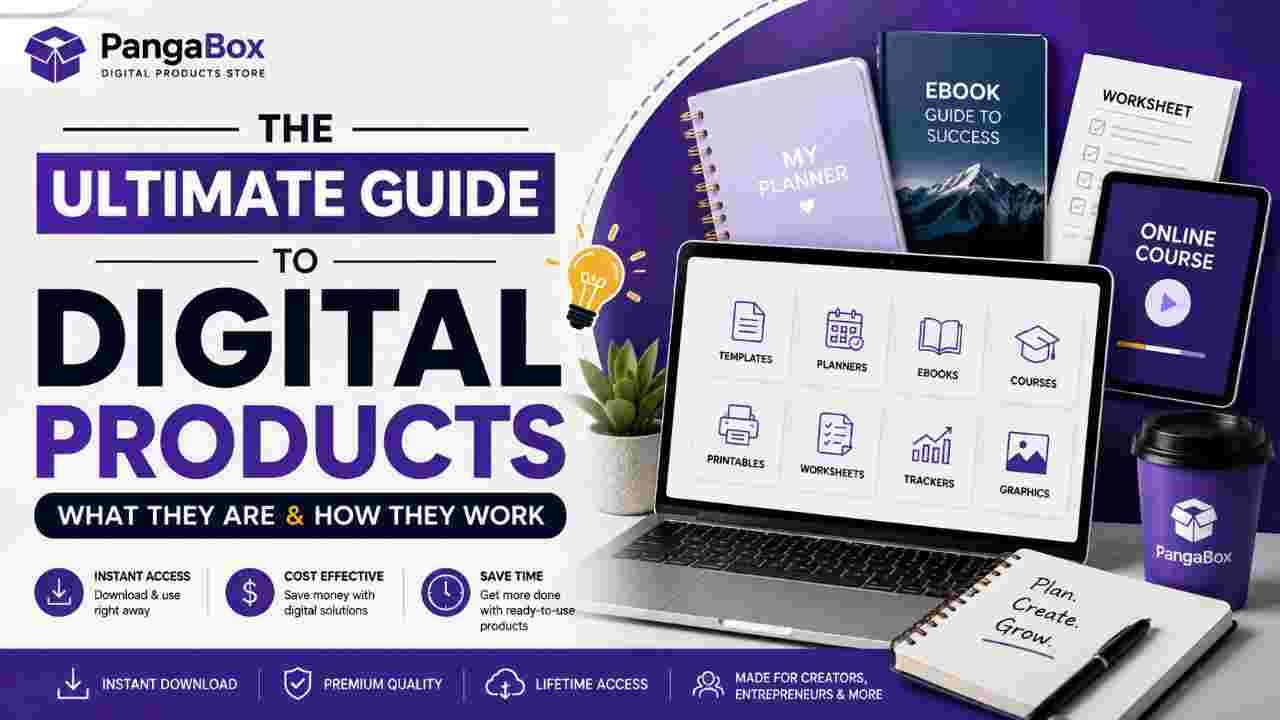
Common examples include:
- Ebooks and PDF guides
- Online courses and video training
- Templates (Notion, Canva, spreadsheets, presentations)
- Software, apps, and SaaS tools
- Digital art, stock photos, and design assets
- Music, sound effects, and podcasts
- Memberships and private communities
- Printables and planners
- AI prompt packs and automation workflows
If it can be created once and delivered infinitely without producing another physical copy, it is a digital product.
How Digital Products Work
The process is simpler than most people expect. It usually follows four clear stages:
1. Creation
Someone builds the product using tools they already have or can easily learn — a writing app, design software, video editor, or code editor. The creation cost is mostly time and skill. Once finished, the product is ready to be sold repeatedly.
2. Packaging & Hosting
The file or access is prepared for delivery. This might mean uploading a PDF to a platform, hosting video lessons on a course site, or setting up a membership area. The product needs a clean, professional way for buyers to receive it instantly.
3. Selling
The product is listed on a website, marketplace, or sales page. Payment is collected through processors like Stripe, PayPal, or the platform’s own system. After payment is confirmed, delivery happens automatically in most cases.
4. Delivery
The customer receives the product within seconds or minutes — usually through an email with a download link, instant access to a member area, or a direct file download. No shipping, no waiting, no inventory management.
This automatic cycle is what makes digital products so powerful. The same file or course can be sold to one person or ten thousand people with almost identical effort after the initial creation.
Why Digital Products Have Grown So Popular
Several practical advantages explain their rise:
- Extremely high profit margins once created (often 80–95%)
- No inventory, storage, or shipping costs
- Global reach from day one
- Ability to scale without hiring a large team
- Easy updates and improvements over time
- Potential for passive or semi-passive income
For many creators and small businesses, digital products solve a fundamental problem: how to sell value without the heavy operational costs of physical goods or pure service work.
Different Types of Digital Products and How They Function
Not all digital products work the same way. Here are the main categories and how delivery usually happens:
Downloadable files (ebooks, templates, printables, music)
Customer pays → receives a direct download link. Simple and fast.
Online courses
Customer pays → gains access to a structured set of video lessons, worksheets, and sometimes community features. Delivery happens through a membership or course platform.
Software and SaaS
Customer pays a one-time fee or subscription → receives login credentials or a downloadable app. Ongoing access is controlled by the system.
Memberships and communities
Customer pays recurring fees → receives continuous access to content, resources, or a private group. Delivery is ongoing rather than one-time.
Licensed digital assets (stock photos, fonts, UI kits)
Customer pays → receives files with clear usage rights. Delivery is usually instant download.
Understanding these differences helps you choose the right format for what you want to create or sell.
Key Things to Know Before Creating or Buying Digital Products
For creators:
The real work is in creating something people actually want and making the buying experience smooth. A great product with a confusing checkout process will underperform. A good product with clear delivery and support will often sell better than a perfect product that is hard to access.
For buyers:
Digital products are usually non-refundable once downloaded or accessed (though many sellers offer guarantees). Always check the format, file type, and any system requirements before purchasing. Also look at whether updates are included.
Frequently Asked Questions
Are digital products really “passive” income?
They can become low-effort after the initial creation and setup, but they are rarely completely passive. Marketing, customer support, and occasional updates still require attention. The best results usually come from treating them as semi-passive systems rather than pure set-and-forget income.
Do I need technical skills to create digital products?
Not necessarily. Many successful products (ebooks, templates, planners, simple courses) can be made with tools most people already know how to use. More complex products like software require higher technical ability, but there is a wide range of options for different skill levels.
Where do people sell digital products?
Common options include personal websites (using tools like Gumroad, Lemon Squeezy, or Shopify), marketplaces (Etsy, Creative Market), and course platforms (Teachable, Kajabi, Thinkific). Many creators use a combination of their own site and marketplaces.
What makes a digital product successful?
Clarity and usefulness. Products that solve a specific, painful problem for a clear audience tend to perform best. Broad, vague products struggle. Specific ones that save time, reduce frustration, or deliver a clear result usually sell more consistently.
Is it legal to sell digital products I create?
Yes, as long as the content is original or you have the proper rights and licenses. Using copyrighted material without permission is not allowed. Creating original work or properly licensed assets keeps everything clean.
Final Thoughts
Digital products work because they separate the creation of value from the limitations of physical production and delivery. Once you understand what they are and how the simple cycle of create → package → sell → deliver functions, the entire category becomes much clearer.
Whether you want to buy useful digital tools or create and sell your own, the same principles apply: focus on real usefulness, keep delivery frictionless, and treat the product as something that can improve over time.
The digital product space continues to grow because it solves real problems for both creators and buyers. Understanding how it works is the first step to using it well.